
| Table of Contents 1.Understanding Skin Pigmentation What Is Melasma? 2.What Causes Melasma? 3.What Is Post-Acne Pigmentation? 4.What Causes Post-Acne Pigmentation? 5.Melasma vs Post-Acne Pigmentation: Key Differences 6.How Can You Tell Melasma and Post-Acne Pigmentation Apart? 7.Why Correct Diagnosis Matters Before Treatment 8.Why Melasma Can Be Challenging to Treat 9.Treatment Approaches for Melasma 10.Treatment Approaches for Post-Acne Pigmentation 11.Can Chemical Peels Help Pigmentation? 12.Can Laser Treatments Be Used for Pigmentation? 13.Importance of Sun Protection in Pigmentation Treatment 14.Common Mistakes When Treating Pigmentation 15.Why Professional Pigmentation Assessment Matters 16.Personalized Pigmentation Treatment Planning 17.Frequently Asked Questions 18.Final Thoughts |
Pigmentation is one of the most common skin concerns, but not all pigmentation is caused by the same condition. Melasma and post-acne pigmentation can both appear as dark or uneven areas on the skin, yet they have different causes, patterns, and treatment considerations.
This is why identifying the type of pigmentation before choosing a treatment is so important. A treatment that works well for one pigmentation concern may not be the most appropriate approach for another.
Understanding the differences between melasma and post-acne pigmentation can help you make informed decisions about professional pigmentation treatment and avoid using unnecessary or unsuitable products or procedures.
1. Understanding Skin Pigmentation
Skin pigmentation refers to changes in the colour of the skin caused by variations in melanin production. Melanin is the natural pigment responsible for giving the skin its colour.
When the skin produces excess melanin in certain areas, dark patches or spots can develop. This can happen for several reasons, including sun exposure, hormonal changes, inflammation, acne, skin irritation, and other factors.
Because pigmentation can have different causes, identifying the specific type of pigmentation is an important first step before choosing a treatment.
Two commonly confused pigmentation concerns are melasma and post-acne pigmentation.
2. What Is Melasma?
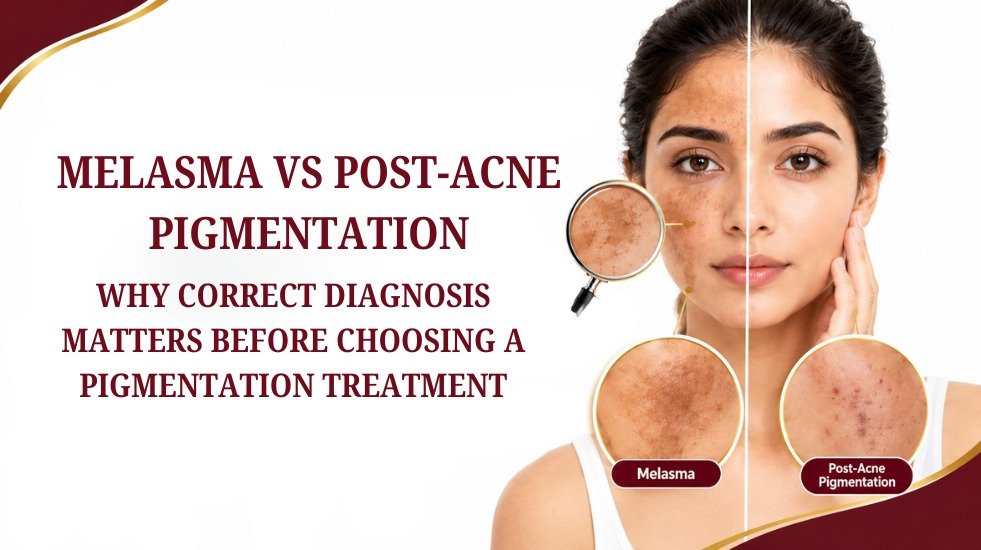
Melasma is a pigmentation condition that commonly appears as brown, grey-brown, or darker patches on the skin.
It frequently affects areas of the face such as:
- Cheeks
- Forehead
- Upper lip
- Nose
- Chin
Melasma often appears in a relatively symmetrical pattern, with pigmentation developing on both sides of the face.
Unlike an individual acne mark, melasma can involve larger areas of pigmentation and may become more noticeable with sun exposure or other triggers.
3. What Causes Melasma?
Melasma can have multiple contributing factors. It is often associated with a combination of hormonal influences, ultraviolet exposure, genetics, and individual skin characteristics.
Common factors associated with melasma include:
Hormonal Influences
Hormonal changes can stimulate pigment-producing cells and contribute to the development or worsening of melasma.
Sun Exposure
Ultraviolet radiation can stimulate melanin production and make existing pigmentation more noticeable.
Genetics
Some individuals may have a greater tendency to develop melasma based on their genetic background and skin characteristics.
Heat and Environmental Exposure
For some individuals, heat and environmental factors may contribute to pigmentation becoming more noticeable.
Because melasma can be influenced by multiple factors, treatment often requires ongoing management rather than a single procedure.
4. What Is Post-Acne Pigmentation?
Post-acne pigmentation refers to dark marks that remain after an acne lesion or inflammation has healed.
These marks can develop after:
- Pimples
- Acne cysts
- Inflammatory acne
- Picking or squeezing acne
- Skin inflammation
Post-acne pigmentation is often more localized than melasma. Instead of appearing as broad symmetrical patches, it may appear as individual brown or darker spots corresponding to previous acne lesions.
The colour and intensity can vary depending on the individual’s skin type, severity of inflammation, and degree of pigmentation response.
5. What Causes Post-Acne Pigmentation?
When acne causes inflammation, the skin can respond by producing increased amounts of melanin.
After the acne lesion heals, the excess pigment may remain visible for some time. This can result in a dark mark even after the original acne has disappeared.
Several factors can influence the development of post-acne pigmentation:
- Severity of acne inflammation
- Picking or squeezing pimples
- Sun exposure
- Skin type
- Repeated irritation
- Delayed acne treatment
Preventing new acne breakouts and reducing skin inflammation can therefore be an important part of managing post-acne pigmentation.
6. Melasma vs Post-Acne Pigmentation: Key Differences
Although both conditions involve excess pigmentation, their appearance and underlying triggers can be different.
| Feature | Melasma | Post-Acne Pigmentation |
| Common appearance | Larger patches | Individual dark spots or marks |
| Typical pattern | Often symmetrical | Usually linked to previous acne lesions |
| Common areas | Cheeks, forehead, upper lip, chin | Areas where acne occurred |
| Major triggers | Hormones, sun exposure, genetics | Acne inflammation and skin injury |
| Recurrence | Can recur | Usually fades gradually |
| Treatment approach | Often requires long-term management | Focuses on pigment reduction and acne control |
This comparison highlights why simply treating “dark spots” without identifying their cause may not produce the desired outcome.
7. How Can You Tell Melasma and Post-Acne Pigmentation Apart?
A professional skin assessment can help distinguish between different types of pigmentation.
Pattern of Pigmentation
Melasma often presents as broader and more symmetrical patches, while post-acne pigmentation tends to correspond to areas where acne previously occurred.
Location
The location of pigmentation can provide useful clues. Melasma commonly affects central facial areas, whereas post-acne marks can occur anywhere previous inflammatory acne was present.
History of Acne
If dark spots developed after pimples or acne lesions healed, post-acne pigmentation may be more likely.
History of Hormonal or Sun-Related Changes
Pigmentation that develops or worsens around hormonal changes or increased sun exposure may require assessment for melasma.
However, pigmentation can sometimes have overlapping features. Professional evaluation is therefore more reliable than self-diagnosis.
8. Why Correct Diagnosis Matters Before Treatment
Not all pigmentation responds in the same way to treatment.
A common mistake is choosing a pigmentation treatment based only on how the skin looks rather than understanding why the pigmentation developed.
For example, a treatment plan designed for isolated post-acne marks may not address the factors contributing to melasma.
Similarly, aggressive treatment of melasma without appropriate planning may not always provide the expected results and may potentially cause additional irritation or pigmentation in some skin types.
Correct diagnosis helps guide the choice of treatment, intensity, frequency, and long-term maintenance strategy.
9. Why Melasma Can Be Challenging to Treat
Melasma can be particularly challenging because it is often influenced by multiple factors.
Even when pigmentation improves, it may return if contributing triggers are not controlled.
Sun exposure is particularly important because ultraviolet radiation can stimulate pigment production and make melasma more noticeable.
For this reason, melasma management often involves a combination of professional treatment, skincare, sun protection, and long-term monitoring.
The goal is not only to reduce existing pigmentation but also to help manage the factors that can contribute to recurrence.
10. Treatment Approaches for Melasma
The appropriate treatment for melasma depends on its severity, pigmentation pattern, skin characteristics, and individual needs.
Depending on professional assessment, treatment may involve:
Topical Pigmentation Care
Certain topical products may be recommended to help reduce excess pigmentation and support skin renewal.
Chemical Peels
Professionally selected chemical peels can help improve uneven pigmentation by promoting controlled exfoliation and skin renewal.
The type and strength of peel should be selected according to the individual’s skin condition.
Laser-Based Treatments
In selected cases, laser or light-based treatments may be considered as part of a pigmentation management plan.
However, not every laser treatment is suitable for every type of melasma or skin type. Professional assessment is important before choosing this approach.
Combination Treatment
Melasma may sometimes require a combination of approaches rather than relying on a single procedure.
11. Treatment Approaches for Post-Acne Pigmentation
Post-acne pigmentation may be managed through approaches designed to reduce excess pigment and improve overall skin tone.
Treating the underlying acne is also important. If new acne continues to develop, additional pigmentation may form and make it difficult to maintain improvement.
12. Can Chemical Peels Help Pigmentation?
Chemical peels are commonly used in professional skincare to improve uneven skin tone and pigmentation.
A peel uses a carefully selected chemical solution to exfoliate the outer layers of the skin and encourage skin renewal.
Depending on the type of pigmentation and skin condition, chemical peels may help improve:
- Uneven skin tone
- Post-acne pigmentation
- Surface pigmentation
- Dull-looking skin
However, the appropriate peel depends on the individual’s skin type and pigmentation condition.
For melasma-prone skin, treatment should be planned carefully because excessive irritation may worsen pigmentation in some individuals.
13. Can Laser Treatments Be Used for Pigmentation?
Laser and light-based treatments may be considered for certain pigmentation concerns.
However, pigmentation treatment with lasers should not be approached as a one-size-fits-all procedure.
The appropriate technology, settings, number of sessions, and treatment intervals depend on factors such as:
A professional assessment is important before deciding whether laser treatment is appropriate.
14. Importance of Sun Protection in Pigmentation Treatment
Sun protection is one of the most important parts of managing pigmentation.
UV exposure can stimulate melanin production and make pigmentation more noticeable. It can also contribute to the recurrence of pigmentation after treatment.
For individuals with melasma, consistent sun protection can be particularly important as part of long-term pigmentation management.
15. Common Mistakes When Treating Pigmentation
Treating All Pigmentation the Same Way
Different pigmentation conditions can require different treatment strategies.
Using Too Many Active Products
Combining multiple strong products without professional guidance may irritate the skin and potentially worsen pigmentation.
Ignoring Sun Protection
Pigmentation can become darker or recur when the skin is repeatedly exposed to UV radiation.
Picking Acne
Squeezing or picking acne can increase inflammation and contribute to post-acne pigmentation.
Expecting Immediate Results
Pigmentation often improves gradually. Multiple sessions or consistent skincare may be required depending on the condition.
Choosing Treatment Based Only on Online Information
Online information can help you understand pigmentation, but it cannot replace a professional assessment of your specific skin condition.
16. Why Professional Pigmentation Assessment Matters
Pigmentation can have several causes, and some conditions can look similar.
A professional assessment can help determine:
- The likely type of pigmentation
- Possible contributing factors
- Skin characteristics
- Pigmentation severity
- Suitable treatment options
- Whether combination treatment may be beneficial
- Appropriate maintenance and skincare
This allows treatment to be more targeted rather than relying on a generic pigmentation solution.
17. Personalized Pigmentation Treatment Planning
There is no single pigmentation treatment that is ideal for everyone.
A personalized plan may consider:
Type of Pigmentation
Whether the pigmentation is more consistent with melasma, post-acne pigmentation, or another pigmentation concern.
Skin Type
Skin characteristics can influence treatment selection and the risk of irritation.
Pigmentation Depth
Pigment located at different depths may respond differently to treatment.
Current Skincare
Existing skincare products and previous procedures can influence how the skin responds.
Lifestyle and Sun Exposure
Daily sun exposure and skincare habits can affect long-term pigmentation management.
Treatment Goals
The treatment plan should be designed around realistic goals for improving skin tone and reducing visible pigmentation.
18. Frequently Asked Questions
Is melasma the same as post-acne pigmentation?
No. Both involve excess pigmentation, but they have different causes and typical patterns. Melasma is often associated with hormonal and environmental factors, while post-acne pigmentation develops following acne-related inflammation.
How can I tell whether I have melasma or acne pigmentation?
The appearance, location, symmetry, and history of acne can provide clues. However, pigmentation can overlap, so professional assessment is recommended for an accurate evaluation.
Which is harder to treat: melasma or post-acne pigmentation?
Melasma can often be more challenging because it may be influenced by hormones, sun exposure, genetics, and other factors and may recur. Treatment response varies between individuals.
Can chemical peels treat both conditions?
Chemical peels may be used for certain pigmentation concerns, including post-acne pigmentation and selected cases of melasma. The type and strength of treatment should be chosen based on the individual’s skin and pigmentation.
Can laser treatment remove melasma permanently?
There is no guarantee of permanent elimination of melasma. It can recur, particularly when contributing triggers such as sun exposure or hormonal influences remain present.
Can acne cause permanent dark marks?
Post-acne pigmentation can gradually fade, but the duration varies depending on factors such as skin type, severity of inflammation, sun exposure, and treatment.
Does sunscreen help prevent pigmentation from getting worse?
Consistent sun protection can help reduce UV-related stimulation of pigmentation and is an important part of pigmentation management.
Should I use strong pigmentation creams without consulting a professional?
It is better to avoid using strong active treatments without appropriate guidance. Incorrect product selection or excessive irritation may worsen certain pigmentation concerns.
Can melasma and post-acne pigmentation occur together?
Yes. A person can have more than one type of pigmentation at the same time. This is another reason why proper assessment is important before choosing treatment.
How long does pigmentation treatment take to show results?
Results vary depending on the type and severity of pigmentation, the treatment selected, and individual skin response. Pigmentation often improves gradually rather than immediately.
19. Final Thoughts
Melasma and post-acne pigmentation may both appear as dark patches or spots, but they are not the same condition. Their causes, patterns, triggers, and treatment considerations can differ significantly.
This is why correct diagnosis before choosing a pigmentation treatment is so important. A treatment plan should consider the type of pigmentation, skin characteristics, possible triggers, previous treatments, and the individual’s long-term goals.