
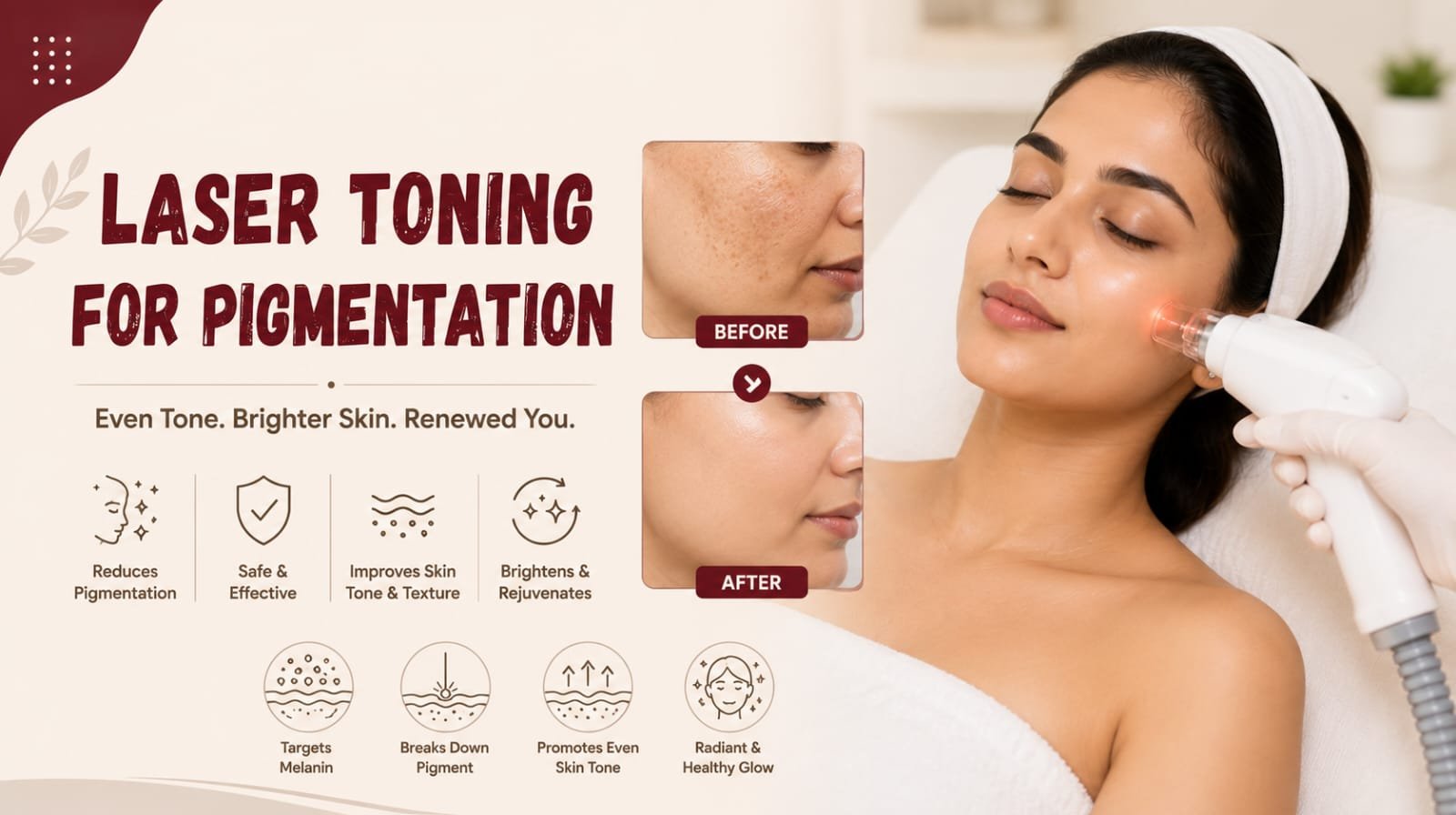
Skin pigmentation is one of the most common reasons people visit a dermatologist. Whether it appears as dark patches after acne, uneven skin tone caused by sun exposure, melasma, or stubborn pigmentation that doesn’t improve with skincare products, it can affect both confidence and overall skin appearance.
Many people spend months trying home remedies, over-the-counter creams, and social media skincare trends without understanding the actual cause of their pigmentation. While some pigmentation concerns may improve with topical skincare, others require professional evaluation and advanced dermatological treatments.
One of the most effective technologies available today for managing certain pigmentation concerns is Laser Toning. At Skyn Care Clinic, pigmentation treatments are performed using the Bi-Axis Laser Toning System, an advanced laser technology used for treating pigmentation concerns and improving overall skin tone.
Before choosing laser treatment, it is important to understand what causes pigmentation, how laser toning works, who may benefit from treatment, and why dermatologist evaluation plays a crucial role in achieving safe and effective results.
Understanding Skin Pigmentation
Skin colour is determined by melanin, a natural pigment produced by specialized cells called melanocytes. Melanin helps protect the skin from ultraviolet (UV) radiation and gives each individual their natural skin tone.
When melanin production becomes uneven or excessive, pigmentation develops. This can appear as:
- Dark patches
- Brown spots
- Uneven skin tone
- Post-acne pigmentation
- Melasma
- Sun-induced pigmentation
The appearance and severity of pigmentation vary from person to person, which is why accurate diagnosis is essential before beginning treatment.
Common Causes of Pigmentation
Pigmentation can develop due to several internal and external factors. Identifying the underlying cause helps dermatologists recommend the most appropriate treatment plan.
Sun Exposure
Excessive ultraviolet (UV) exposure is one of the leading causes of pigmentation. Over time, repeated sun exposure can stimulate increased melanin production, resulting in uneven skin tone and dark spots.
Melasma
Melasma is a common pigmentation condition characterized by symmetrical brown or grey-brown patches, usually affecting the cheeks, forehead, nose, and upper lip.
Hormonal influences, pregnancy, genetics, and sun exposure often contribute to melasma.
Post-Inflammatory Hyperpigmentation (PIH)
After acne, skin injuries, or inflammation heal, excess pigment may remain in the affected area. This is known as post-inflammatory hyperpigmentation.
These marks often persist even after acne has resolved.
Hormonal Changes
Hormonal fluctuations associated with pregnancy, certain medications, thyroid disorders, or hormonal imbalances can contribute to pigmentation.
Ageing
As skin ages, years of cumulative sun exposure may result in uneven pigmentation and age-related spots.
Why Every Pigmentation Problem Is Different
One of the biggest misconceptions is that all pigmentation can be treated using the same cream or laser procedure.
In reality, pigmentation differs in:
- Depth within the skin
- Cause
- Severity
- Duration
- Skin type
- Individual response to treatment
Because of these differences, every patient requires a personalized evaluation before beginning treatment.
At Skyn Care Clinic, dermatologists carefully assess your pigmentation before recommending laser toning or any other suitable treatment.
What Is Laser Toning?
Laser toning is a non-surgical dermatological procedure that uses carefully controlled laser energy to target unwanted pigmentation while helping improve overall skin tone.
Rather than affecting the entire skin surface, laser toning selectively targets excess pigment, allowing the body’s natural processes to gradually clear fragmented pigment over time.
Since pigmentation often develops over months or years, treatment is also gradual, and multiple sessions may be recommended depending on the diagnosis.
Understanding Bi-Axis Laser Toning
At Skyn Care Clinic, pigmentation treatments are performed using the Bi-Axis Laser Toning System, an advanced laser technology designed for pigmentation management and skin brightening.
The Bi-Axis Laser Toning system is used for pigmentation-related concerns and improving skin tone. It is not a laser hair reduction system.
Every treatment begins with a dermatologist consultation to determine:
- The type of pigmentation
- Skin tone
- Pigmentation depth
- Medical history
- Previous skin treatments
- Individual treatment goals
Treatment settings are customized according to each patient’s skin condition rather than applying the same protocol to everyone.
How Does Bi-Axis Laser Toning Work?
The laser delivers controlled energy to areas containing excess pigment.
This energy is designed to target unwanted pigmentation while allowing surrounding skin to remain protected through carefully selected treatment settings.
Over multiple treatment sessions, the body’s natural processes gradually help reduce the appearance of pigmentation, resulting in clearer and more even-looking skin.
The number of sessions varies depending on factors such as:
- Type of pigmentation
- Skin tone
- Depth of pigmentation
- Individual response
- Sun exposure habits
- Hormonal influences
Your dermatologist will recommend a personalized treatment schedule after evaluating your skin.
Which Skin Concerns Can Laser Toning Help Address?
Depending on your dermatologist’s assessment, Bi-Axis Laser Toning may be recommended for concerns such as:
- Melasma
- Uneven skin tone
- Sun-induced pigmentation
- Post-inflammatory hyperpigmentation (post-acne marks)
- Dull complexion
- Skin brightening
- Overall skin rejuvenation
Not every pigmentation concern requires laser treatment, which is why a consultation is the first step before deciding on the most appropriate approach.
Who May Be a Suitable Candidate?
Laser toning may be suitable for individuals who have:
- Uneven skin tone
- Melasma
- Acne-related pigmentation
- Sunspots
- Persistent pigmentation that has not responded to skincare
- Dull-looking skin
Suitability depends on your skin type, medical history, current skin condition, and dermatologist evaluation.
What Happens During Your First Consultation?
Every laser toning treatment begins with understanding your skin rather than immediately starting the procedure.
During your consultation, your dermatologist will:
- Examine your pigmentation
- Assess your skin type
- Review your medical history
- Understand previous skin treatments
- Discuss your treatment goals
- Explain expected outcomes
- Develop a personalized treatment plan
This consultation ensures that laser toning is appropriate for your specific pigmentation concern.
What Happens During a Bi-Axis Laser Toning Session?
One of the most common concerns patients have before undergoing laser toning is knowing what to expect during the procedure. Understanding each step helps you feel more comfortable and ensures realistic expectations about the treatment process.
Step 1: Dermatologist Consultation
Every treatment at Skyn Care Clinic begins with a detailed skin assessment rather than immediately proceeding with the laser.
During the consultation, your dermatologist evaluates:
- Your skin type
- Type and depth of pigmentation
- Medical history
- Current skincare routine
- Previous cosmetic procedures
- Sun exposure habits
- Treatment expectations
This evaluation helps determine whether Bi-Axis Laser Toning is the most suitable treatment for your pigmentation concerns.
Step 2: Personalized Treatment Planning
Since no two pigmentation concerns are exactly alike, treatment settings are customized based on your individual skin condition.
Factors considered include:
- Severity of pigmentation
- Skin sensitivity
- Pigment depth
- Treatment area
- Overall skin health
This personalized approach helps ensure that treatment is tailored specifically to your needs.
Step 3: Bi-Axis Laser Toning Procedure
During the procedure, the Bi-Axis Laser Toning System delivers controlled laser energy to areas of excess pigmentation.
The laser selectively targets unwanted pigment while treatment settings are adjusted according to your skin type and pigmentation concerns.
The duration of treatment depends on the size of the area being treated. Smaller facial areas generally require less time than larger treatment areas.
Some patients may notice a mild warming sensation during treatment, although comfort levels vary from person to person.
Step 4: After the Procedure
Following treatment, some individuals may experience temporary redness or mild warmth in the treated area. These responses are generally short-lived and usually settle with appropriate aftercare.
Your dermatologist will provide personalized instructions to help support your skin’s recovery.
What Results Can You Expect?
One of the biggest misconceptions about laser toning is that pigmentation disappears after a single treatment.
Pigmentation often develops gradually over months or years, and improvement typically occurs progressively.
Depending on your diagnosis, you may notice:
- More even-looking skin tone
- Gradual reduction in visible pigmentation
- Brighter-looking skin
- Improved skin texture
- Healthier overall complexion
The number of sessions required depends on factors such as:
- Type of pigmentation
- Depth of pigmentation
- Skin type
- Hormonal influences
- Sun protection habits
- Individual response to treatment
Your dermatologist will recommend a treatment schedule based on your specific condition.
Benefits of Bi-Axis Laser Toning
When recommended after a dermatologist’s evaluation, Bi-Axis Laser Toning may offer several benefits for suitable patients.
Potential benefits include:
- Helps reduce pigmentation
- Supports a more even skin tone
- Improves overall skin brightness
- Helps manage post-inflammatory pigmentation
- May improve melasma when combined with a dermatologist-guided treatment plan
- Supports healthier-looking skin
- Non-surgical treatment
- Personalized treatment for different skin types
Individual outcomes vary, and realistic expectations are discussed during your consultation.
Caring for Your Skin After Laser Toning
Following the recommended aftercare instructions is an important part of achieving the best possible outcome.
Your dermatologist may advise you to:
- Apply sunscreen daily to protect treated skin.
- Avoid unnecessary sun exposure.
- Follow the skincare routine recommended by your dermatologist.
- Avoid harsh exfoliating products for a short period if advised.
- Attend all scheduled follow-up appointments.
Protecting your skin from UV exposure is particularly important, as excessive sun exposure may contribute to recurrent pigmentation.
Common Myths About Laser Toning
Myth 1: Laser Toning Is Only for Fair Skin
Fact: Modern laser technologies such as the Bi-Axis Laser Toning System can be customized according to different skin types after a dermatologist’s assessment.
Myth 2: One Session Removes All Pigmentation
Fact: Pigmentation develops gradually and often requires multiple treatment sessions depending on the diagnosis and severity.
Myth 3: All Pigmentation Can Be Treated the Same Way
Fact: Different pigmentation conditions require different treatment approaches. Melasma, post-inflammatory hyperpigmentation, and sunspots are evaluated individually before treatment is recommended.
Myth 4: Skin Brightening Means Changing Your Natural Skin Colour
Fact: Laser toning aims to improve uneven pigmentation and restore a more even complexion. It does not change your natural skin tone.
Why Choose Skyn Care Clinic for Laser Toning in Chennai?
Effective pigmentation treatment begins with understanding why pigmentation has developed.
At Skyn Care Clinic, every patient receives a detailed dermatologist consultation before treatment begins. Our personalized approach ensures that each treatment plan is based on your skin condition rather than a standardized protocol.
Our pigmentation treatment approach includes:
- Comprehensive skin evaluation
- Dermatologist-led consultation
- Personalized treatment planning
- Bi-Axis Laser Toning for pigmentation management and skin brightening
- Customized laser settings
- Individualized aftercare guidance
- Evidence-based dermatology care
Frequently Asked Questions
What is Bi-Axis Laser Toning?
Bi-Axis Laser Toning is an advanced laser treatment used for managing pigmentation concerns and improving overall skin tone. At Skyn Care Clinic, it is used for pigmentation-related conditions and skin brightening—not for hair reduction.
Is Laser Toning suitable for Indian skin?
Many individuals with Indian skin may be suitable candidates after a dermatologist evaluates their skin type and pigmentation concerns.
Can Laser Toning help with melasma?
Depending on your diagnosis, Bi-Axis Laser Toning may be recommended as part of a personalized treatment plan for managing melasma. Your dermatologist will determine the most appropriate approach.
How many sessions are required?
The number of sessions varies depending on the type of pigmentation, its depth, your skin type, and your individual response to treatment.
Is there downtime after Laser Toning?
Most patients experience minimal downtime. Temporary redness or mild warmth may occur immediately after treatment and generally settles within a short period.
Final Thoughts
Pigmentation is a complex skin concern that requires accurate diagnosis and personalized treatment rather than a one-size-fits-all solution. Whether your pigmentation is caused by sun exposure, melasma, post-inflammatory hyperpigmentation, or uneven melanin production, the first step is understanding the underlying cause.
At Skyn Care Clinic, pigmentation treatments are performed using the Bi-Axis Laser Toning System, with every treatment customized according to your skin type, pigmentation pattern, and treatment goals. Our dermatologist-led approach focuses on safe, evidence-based care that supports clearer, brighter, and more even-toned skin over time.
If you’re looking for Laser Toning for Pigmentation in Chennai, Melasma Treatment, Acne Pigmentation Treatment, or Skin Brightening with Bi-Axis Laser Toning, schedule a consultation with the dermatology team at Skyn Care Clinic. A personalized skin assessment can help determine the most appropriate treatment plan to achieve healthier, more radiant skin.