
| Table of Contents 1.Understanding Melasma and Uneven Pigmentation 2.What Causes Melasma? 3.What Is a Chemical Peel for Melasma? 4.How Chemical Peels Help Improve Uneven Pigmentation 5.Potential Benefits of Professional Chemical Peels 6.Who May Benefit From Chemical Peels for Melasma? 7.Chemical Peel vs Other Melasma Treatments 8.Can Chemical Peels Be Combined With Other Pigmentation Treatments? 9.Why Professional Chemical Peels Are Important for Melasma 10.Factors That Can Affect Melasma Treatment Results 11. Why Choose Personalized Melasma Treatment? 12.Frequently Asked Questions 13.Can chemical peels help treat melasma? 14.Are chemical peels safe for melasma-prone skin? 15.How many chemical peel sessions are needed for melasma? 16.Does melasma come back after a chemical peel? 17.Can chemical peels be combined with other pigmentation treatments? 18.How important is sunscreen after a chemical peel? 19.Final Thoughts |
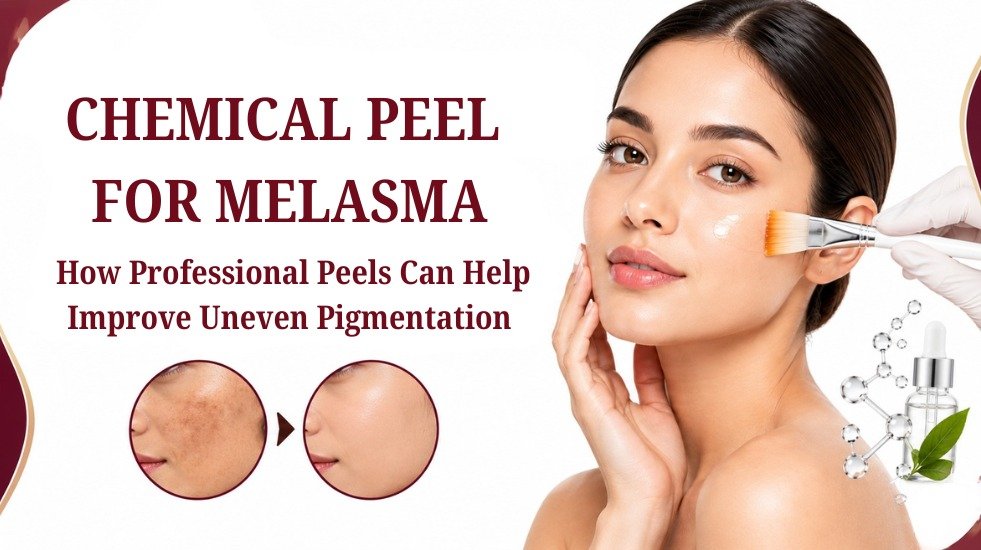
Chemical Peel for Melasma: How Professional Peels Can Help Improve Uneven Pigmentation
Melasma is a common pigmentation concern that causes brown, grey-brown, or darker patches to appear on the face. It most commonly affects areas such as the cheeks, forehead, nose, and upper lip. Although melasma is not usually harmful, persistent pigmentation can affect skin appearance and confidence.
Several factors can contribute to melasma, including sun exposure, hormonal changes, genetics, and certain medications. While over-the-counter creams and home remedies are widely available, melasma often requires a consistent and professionally guided treatment approach.
Today, dermatology offers several options for managing uneven pigmentation, including chemical peels, topical pigmentation treatments, laser-based procedures, and personalized skin rejuvenation treatments. Among these, professional chemical peels can help improve the appearance of pigmentation by carefully exfoliating the skin and supporting a more even-looking complexion.
At a professional dermatology clinic, treatment should begin with a detailed skin assessment. A dermatologist can evaluate the type and severity of pigmentation, identify possible triggers, and recommend a treatment plan based on the individual’s skin type and concerns.
Understanding Melasma and Uneven Pigmentation
Melasma is a condition in which excess melanin production leads to darker patches on the skin.
It commonly appears on:
- Cheeks
- Forehead
- Nose
- Upper lip
- Chin
- Other areas exposed to sunlight
Melasma can develop gradually and may become more noticeable after prolonged sun exposure or hormonal changes.
Pigmentation can vary from person to person. Some individuals may have mild patches, while others may experience more widespread or persistent uneven skin tone.
Because pigmentation can have different causes, identifying the underlying trigger is important before beginning treatment.
What Causes Melasma?
Melasma can be influenced by several factors.
Common contributing factors include:
- Sun exposure
- Hormonal changes
- Pregnancy
- Oral contraceptives
- Hormone-related changes
- Genetics
- Certain medications
- Heat and environmental exposure
- Skin irritation or inflammation
Ultraviolet exposure is particularly important because sunlight can stimulate melanin production and make pigmentation more noticeable.
For this reason, protecting the skin from sunlight is an important part of managing melasma.
What Is a Chemical Peel for Melasma?
A chemical peel for melasma is a professional skin treatment that uses a carefully selected chemical solution to exfoliate the outer layers of the skin.
Depending on the individual’s pigmentation, skin type, and treatment goals, a dermatologist may select an appropriate peel formulation and strength.
The controlled exfoliation process can help remove damaged surface skin cells and support the appearance of a more even skin tone.
Professional chemical peels are different from attempting strong exfoliating products at home. The type, concentration, application time, and treatment frequency should be selected according to the patient’s skin condition.
How Chemical Peels Help Improve Uneven Pigmentation
Chemical peels can help improve the appearance of uneven pigmentation through controlled exfoliation.
The treatment may help:
- Remove accumulated dead skin cells
- Improve skin texture
- Reduce the appearance of superficial pigmentation
- Promote a more even-looking complexion
- Support skin renewal
- Improve overall skin radiance
The results depend on the depth and type of pigmentation, skin type, treatment formulation, and individual response.
Chemical peels should therefore be considered as part of a professionally supervised pigmentation treatment plan rather than a one-time solution.
Potential Benefits of Professional Chemical Peels
Professional chemical peels can provide several skin-rejuvenating benefits when appropriately selected.
Helps Improve Uneven Skin Tone
Chemical exfoliation can help reduce the appearance of superficial pigmentation and create a more even-looking complexion.
Supports Skin Renewal
Peels encourage the removal of older surface skin cells, supporting the natural process of skin renewal.
Improves Skin Texture
By removing accumulated dead skin cells, chemical peels may help create smoother-feeling skin.
Enhances Skin Radiance
A professionally performed peel may help improve dullness and give the skin a fresher appearance.
Can Be Customized
Peel type and strength can be selected according to the individual’s skin condition, pigmentation, and treatment goals.
Can Complement Other Treatments
When appropriate, chemical peels may be combined with topical treatments or other dermatologist-recommended pigmentation procedures.
Who May Benefit From Chemical Peels for Melasma?
Professional chemical peels may be considered for individuals experiencing:
- Uneven skin tone
- Mild to moderate pigmentation
- Superficial pigmentation
- Melasma
- Sun-related pigmentation
- Dull-looking skin
- Uneven skin texture
However, chemical peels are not suitable for everyone or every type of pigmentation.
A dermatologist should first evaluate the skin and determine whether a chemical peel is appropriate.
Chemical Peel vs Other Melasma Treatments
Melasma can be managed using different treatment approaches, depending on the individual.
| Treatment | Primary Purpose |
| Chemical Peel | Controlled exfoliation to improve pigmentation and skin texture |
| Topical Pigmentation Treatment | Helps manage melanin production and pigmentation with dermatologist-selected products |
| Laser-Based Treatment | May target pigmentation or support skin rejuvenation in selected patients |
| Sun Protection | Helps reduce UV-related pigmentation and prevent worsening |
| Personalized Skin Treatment | Combines appropriate approaches based on individual skin needs |
There is no single treatment that is ideal for everyone with melasma.
The most suitable approach depends on the type of pigmentation, skin tone, sensitivity, triggers, and treatment history.
Can Chemical Peels Be Combined With Other Pigmentation Treatments?
Yes. Depending on the patient’s skin condition, a dermatologist may recommend combining chemical peels with other pigmentation-management approaches.
A personalized treatment plan may include:
- Chemical peels
- Prescription or dermatologist-recommended topical treatments
- Sunscreen and sun protection
- Skin-brightening treatments
- Other pigmentation procedures
- Personalized skincare
Combination treatment should be planned carefully because aggressive or inappropriate treatments may irritate the skin and potentially worsen pigmentation.
Why Professional Chemical Peels Are Important for Melasma
Melasma-prone skin can be sensitive to irritation.
Using strong peeling agents without professional guidance may cause:
- Excessive irritation
- Burning or discomfort
- Skin inflammation
- Increased sensitivity
- Post-inflammatory pigmentation
Professional treatment allows the dermatologist to select an appropriate peel and adjust the treatment according to the patient’s skin response.
The goal is not simply to remove the top layer of skin but to improve pigmentation while maintaining overall skin health.
Factors That Can Affect Melasma Treatment Results
Melasma can be persistent and may return even after successful treatment.
Several factors can influence treatment results, including:
- Sun exposure
- Hormonal changes
- Skin type
- Pigmentation severity
- Treatment consistency
- Skincare routine
- Use of sunscreen
- Individual response to treatment
- Underlying triggers
For this reason, managing melasma often requires ongoing skincare and sun protection rather than relying on a single treatment session.
Why Choose Personalized Melasma Treatment?
Every person’s pigmentation is different.
A personalized treatment plan considers factors such as:
- Type of pigmentation
- Skin tone
- Skin sensitivity
- Pigmentation severity
- Previous treatments
- Lifestyle
- Sun exposure
- Individual treatment goals
A dermatologist can determine whether chemical peeling is appropriate and select the most suitable approach for the patient’s skin.
The objective is to improve pigmentation while maintaining healthy, balanced skin.
Frequently Asked Questions
Can chemical peels help treat melasma?
Yes. Professionally selected chemical peels may help improve the appearance of superficial pigmentation and uneven skin tone. Results depend on the type and severity of melasma and the individual’s skin condition.
Are chemical peels safe for melasma-prone skin?
When appropriately selected and performed by a qualified professional, chemical peels can be used as part of a melasma treatment plan. The peel strength and formulation should be customized according to the skin.
How many chemical peel sessions are needed for melasma?
The number of sessions varies depending on pigmentation severity, skin type, peel formulation, and individual response. A dermatologist can recommend an appropriate treatment schedule after evaluating the skin.
Does melasma come back after a chemical peel?
Melasma can recur because its triggers, such as sun exposure and hormonal changes, may continue. Consistent sun protection and a long-term skincare plan are important for managing recurrence.
Can chemical peels be combined with other pigmentation treatments?
Yes. Depending on the patient’s condition, chemical peels may be combined with topical treatments, sun protection, or other dermatologist-recommended pigmentation procedures.
How important is sunscreen after a chemical peel?
Sunscreen is extremely important after a chemical peel, particularly for people prone to melasma. Sun exposure can increase pigmentation and may interfere with treatment results.
Final Thoughts
Melasma can be a persistent pigmentation concern, but professional treatment can help improve uneven skin tone and support healthier-looking skin.
Chemical peels for melasma provide a controlled approach to exfoliation that may help reduce the appearance of superficial pigmentation, improve skin texture, and promote a more even-looking complexion.
However, successful pigmentation management is not simply about choosing the strongest peel. The right treatment depends on your skin type, pigmentation pattern, sensitivity, underlying triggers, and treatment history.
A professional skin evaluation can help determine whether a chemical peel is suitable for you and whether it should be combined with other pigmentation-management strategies.
If you are looking for Chemical Peel for Melasma, Melasma Treatment, or Pigmentation Treatment in Chennai, consult a qualified dermatologist for a personalized treatment plan designed around your skin’s needs.